The Feather and the Heart: The Story of Ma’at
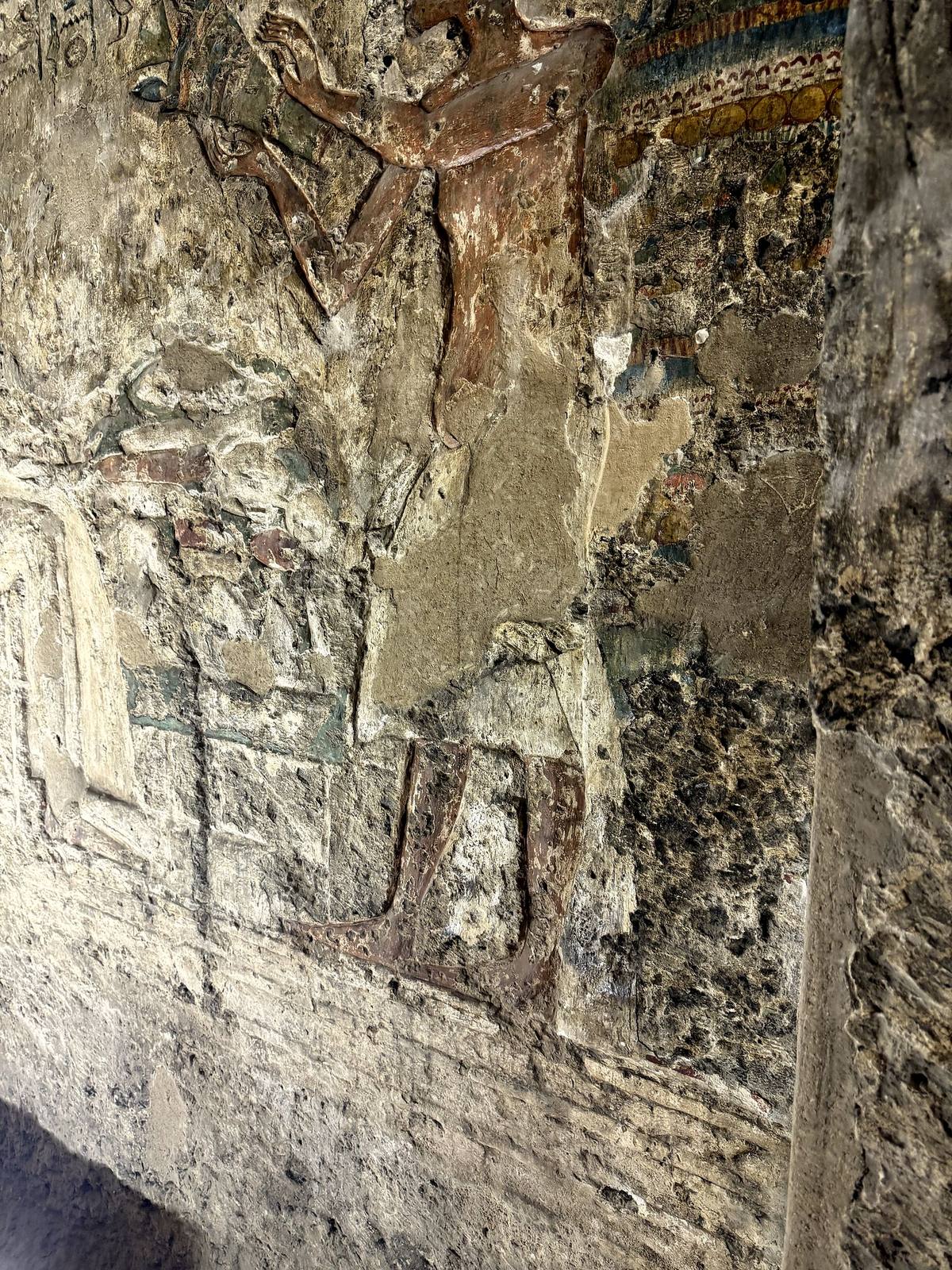
When you die, the Egyptians said, your heart will be weighed against a feather.
You will come to a great hall, the Hall of the Two Truths. Before you, enthroned, sits Osiris, lord of the dead. Around the hall sit forty-two judges, each with a name and a domain. At the centre stands a great balance. On one side of the scale, your heart. On the other, a single ostrich feather.
The feather belongs to Ma’at.
Who Is Ma’at?
Ma’at was both a goddess and a principle. As a goddess, she was shown as a woman wearing a single ostrich feather on her head, the daughter of Ra. As a principle, ma’at meant truth, justice, balance, the right order of the cosmos. It was the order established at creation, which kept the sun rising, the Nile flooding and society functioning. Its opposite was isfet: chaos, falsehood, injustice.
Everyone in Egypt was expected to live in ma’at, from the pharaoh, whose primary duty was to uphold it, to the humblest farmer. Kings were shown offering a small figure of Ma’at to the gods, as if to say: I have kept the order of the world.
The Weighing
The scene of judgement is described in the Book of the Dead, especially spell 125, and painted in vivid colour on papyri buried with the dead.
The deceased enters the hall and addresses each of the forty-two judges by name, declaring their innocence of a particular wrong. Scholars call this the “Negative Confession”: I have not stolen. I have not lied. I have not caused anyone to weep. I have not made anyone hungry. I have not been angry without cause. I have not eavesdropped. I have not polluted the water.
Then the heart is placed on the scale. Anubis, the jackal-headed god, checks the balance. Thoth, the ibis-headed scribe, records the result.
If the heart is heavy with wrongdoing, it outweighs the feather. Waiting beside the scale is Ammit, the Devourer, part crocodile, part lion, part hippopotamus. She devours the heavy heart, and the soul ceases to exist.
But if the heart is as light as the feather, if it is in balance with truth, the deceased is declared “true of voice” and led by Horus into the presence of Osiris, to live forever in the Field of Reeds.
A Light Heart
Notice what is weighed. Not wealth. Not status. Not even religious devotion. The heart, which the Egyptians understood as the seat of thought, feeling, memory and character. What matters is who you have been.
The Egyptians, ever practical, also wrote a spell (spell 30B) asking the heart not to testify against its owner at the weighing. Even they knew that hearts carry secrets.
Ma’at and the Great Work
In the language of the Great Work, ma’at is the measure of the gold. The alchemists said the Philosopher’s Stone was perfectly balanced: all opposites reconciled. A heart as light as a feather is a heart that has done its work. It has released what was heavy. It has made amends. It lives in truth.
You do not need to wait for death to stand in the Hall of Two Truths. The practice is available now.
- If your heart were weighed tonight, what would make it heavy?
- What is one thing you could release, forgive or make right?
- What would it feel like to live with a heart as light as a feather?
Try writing your own confession, not of what you have not done, but of what you will live: I will speak truth. I will not abandon myself. I will honour the waters. These become your vows of ma’at.
Kristina’s Amarna post spoke of meeting “the parts of yourself you’ve kept hidden, and begin bringing them into relationship.” That is the work of ma’at: bringing every part of you into balance, until the heart is light.
A Practice: A Nightly Weighing
The Egyptians imagined the weighing of the heart after death. Many traditions recommend a gentler weighing every evening, so the heart never grows heavy.
- Before sleep, sit quietly and place your hand on your heart.
- Review your day, without judgement. Where did you live in truth and balance?
- Where did you act out of balance: a harsh word, a broken promise, a moment of self-abandonment?
- For each, ask: What would make this right? Note one small action for tomorrow.
- Imagine a single feather resting on your heart. Breathe until it feels light.
- Close with gratitude for the day and its lessons.
Over time, this practice changes how you move through life. You become more aware of small choices and more willing to make amends quickly. The heart stops accumulating weight, and a kind of lightness returns, the lightness the Egyptians associated with being “true of voice”.
Read More on the Blog
Feel called to walk this path?
Book a private call with Kristina to learn about the retreats: The Great Work Pilgrimage, or a one-to-one Private Initiation Journey, where Kristina holds personal initiations and activations for you at Egypt’s sacred sites.
Book a private call with Kristina