The Sun Walks Into the Mountain: Ramesses, Nefertari and Abu Simbel
Twice a year, the sun walks into the mountain.
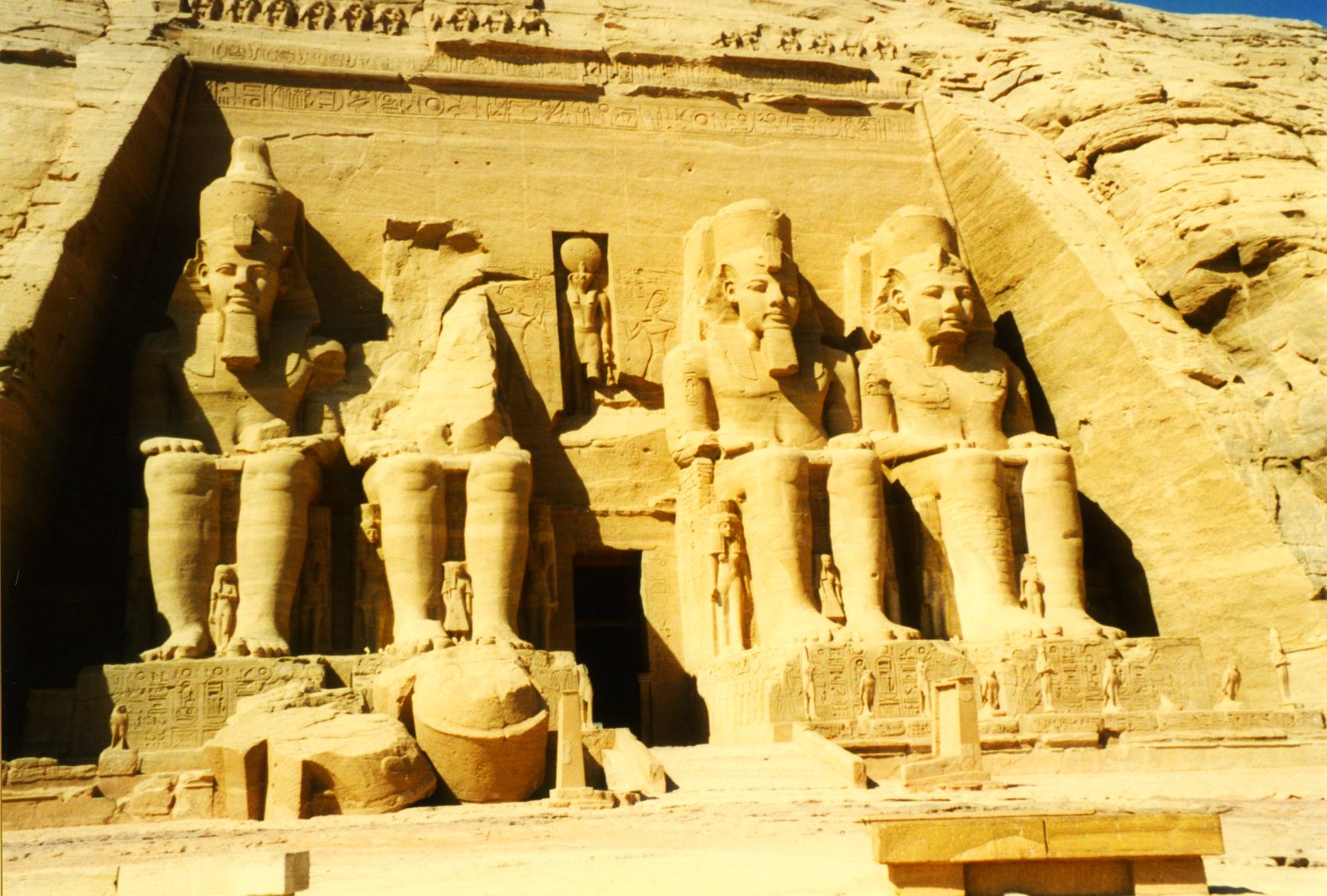
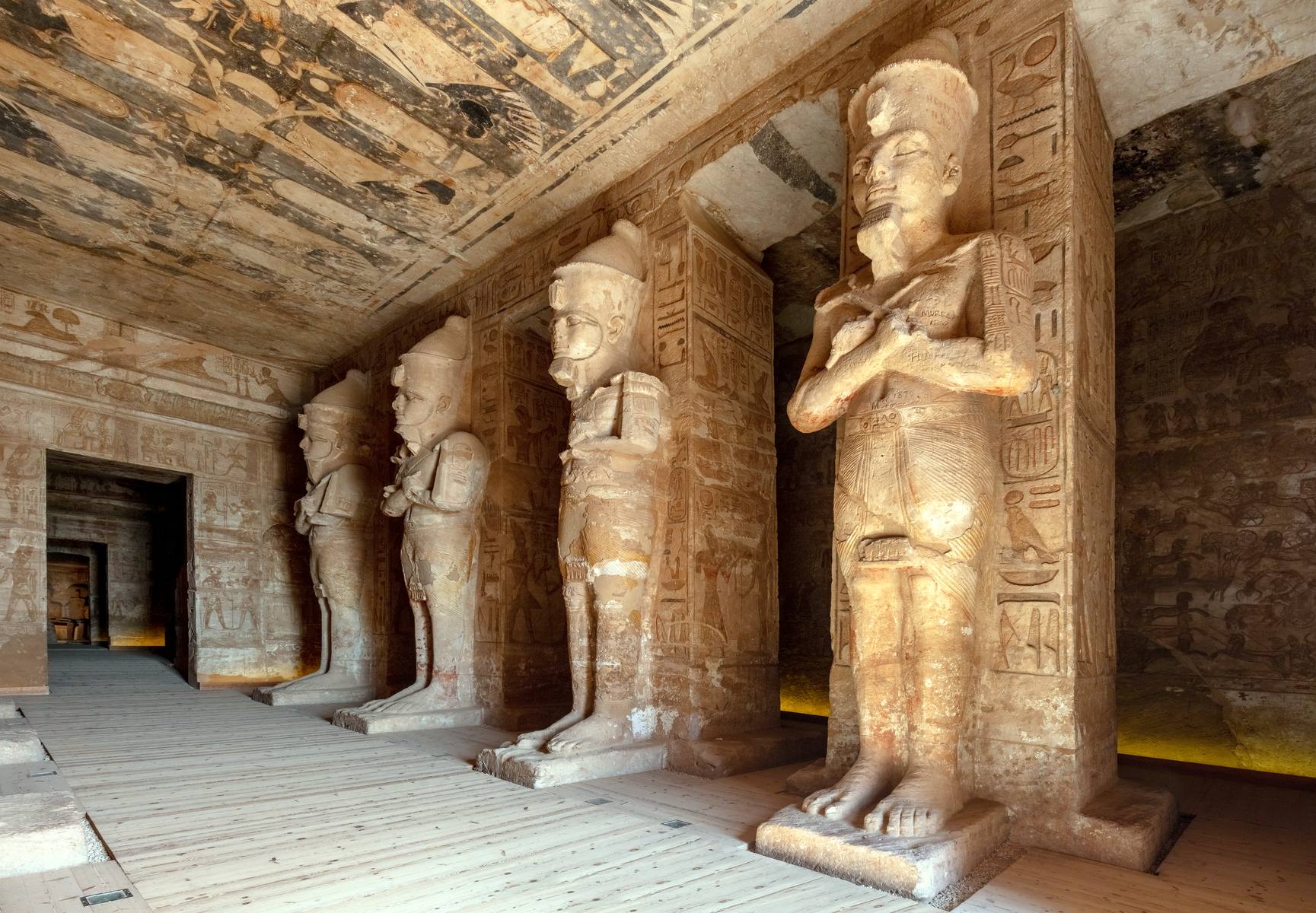
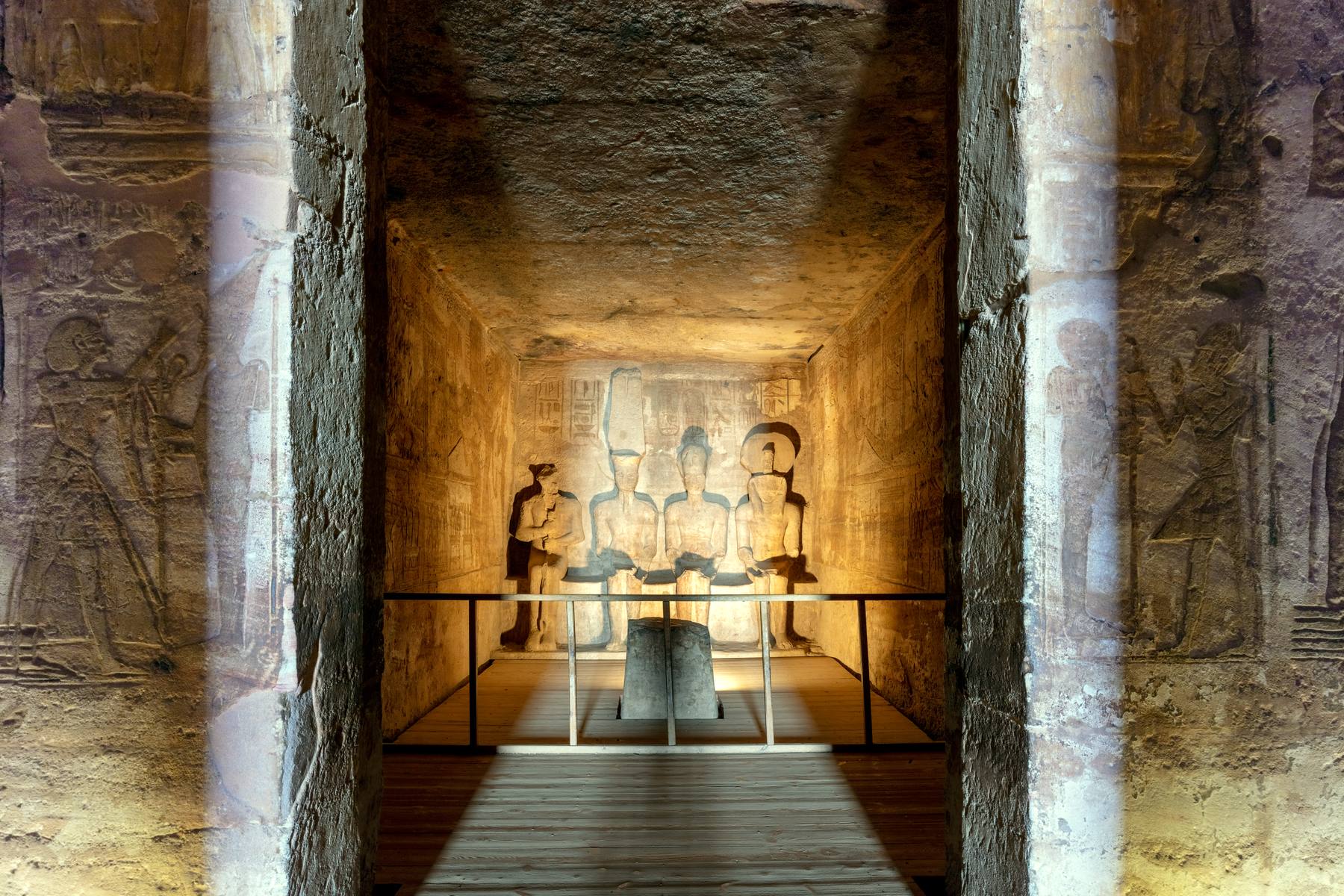
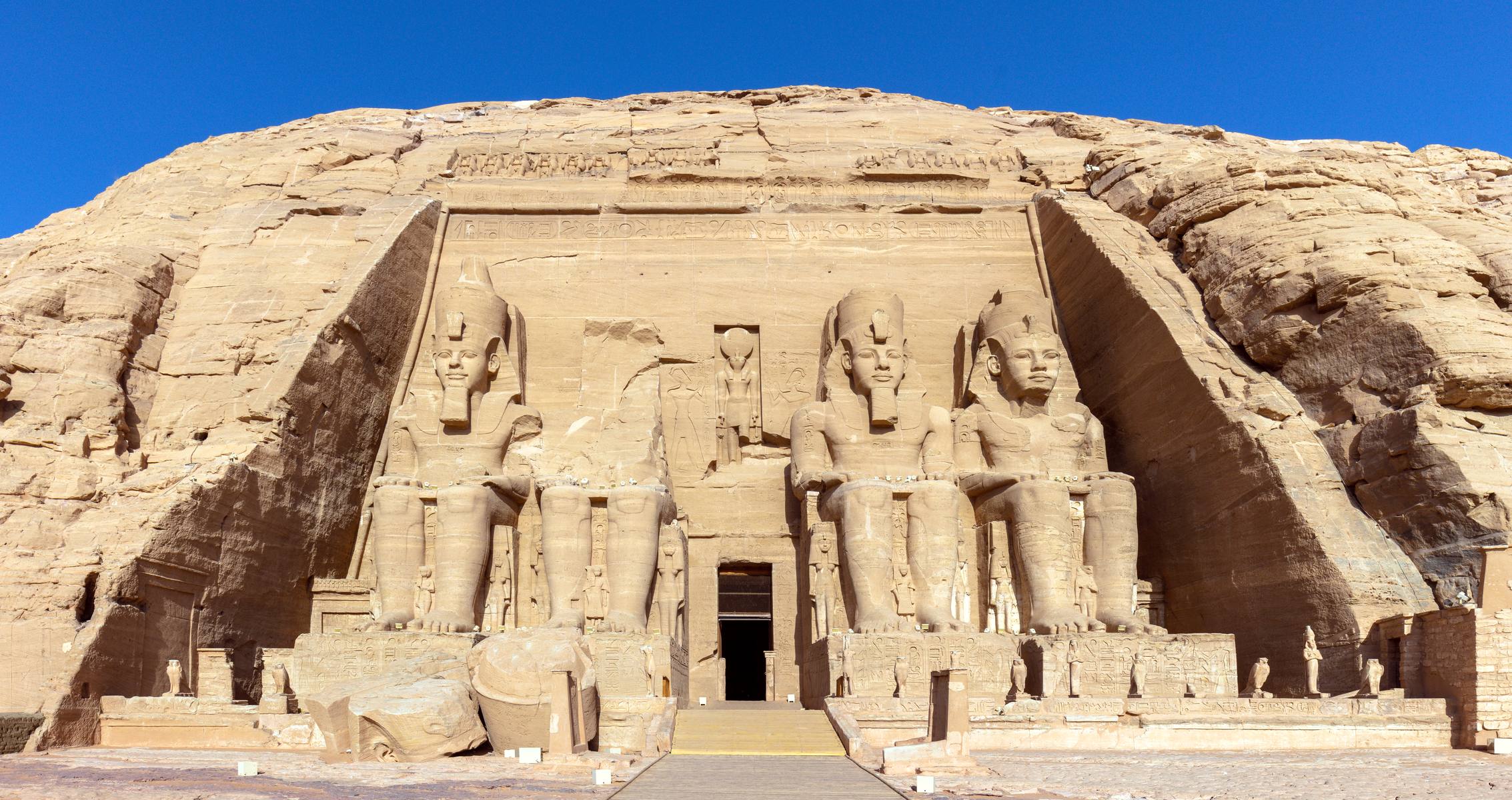
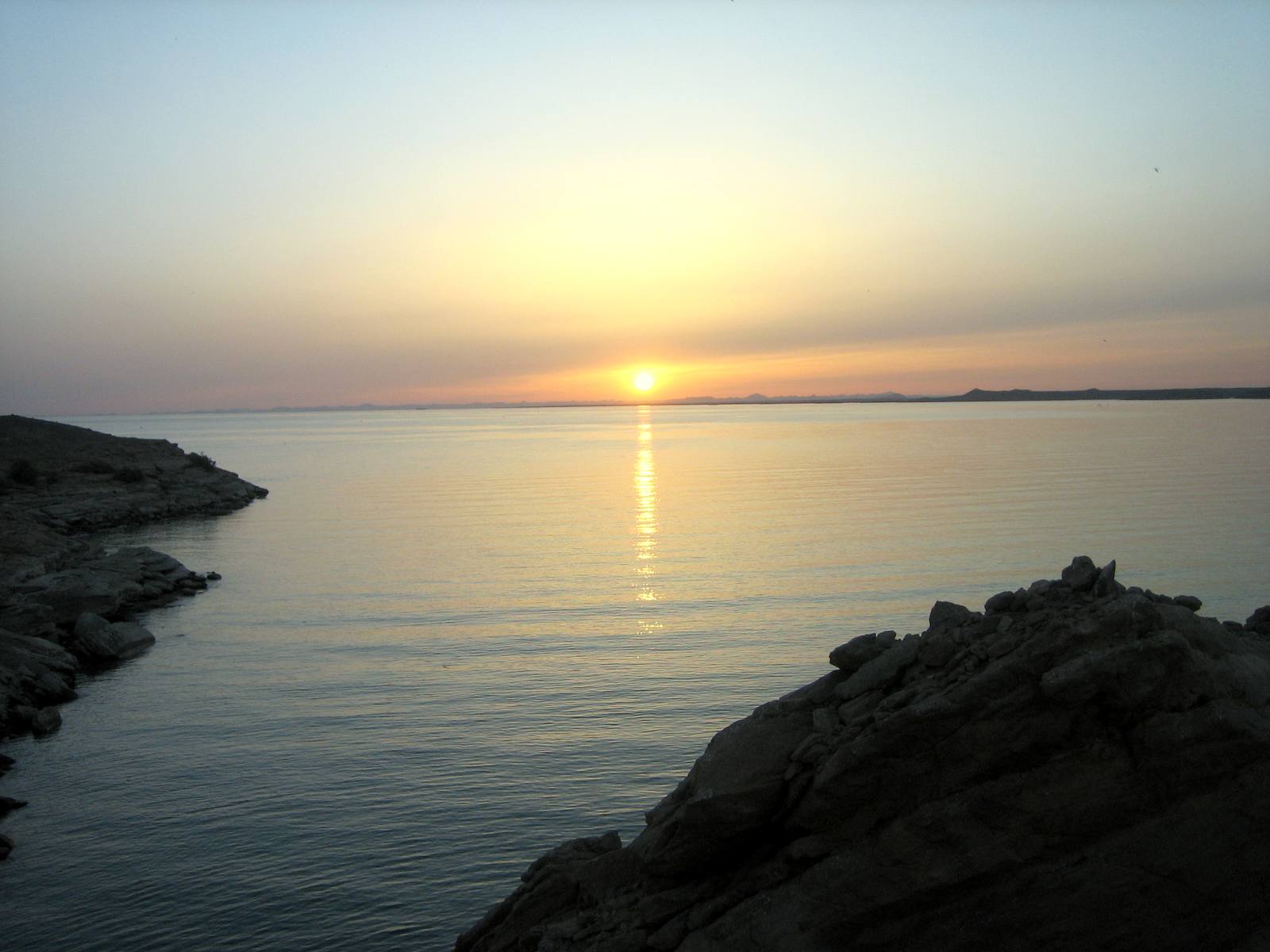
Far south of Aswan, on the edge of Lake Nasser, four colossal figures of Ramesses II sit carved into the face of a sandstone cliff, gazing east across the water. Behind them a temple runs deep into the rock, hall after hall, to a sanctuary where four gods sit in the dark. And on two mornings each year, around 22 February and 22 October, the first rays of sunrise travel the full length of the temple and light up the statues within.
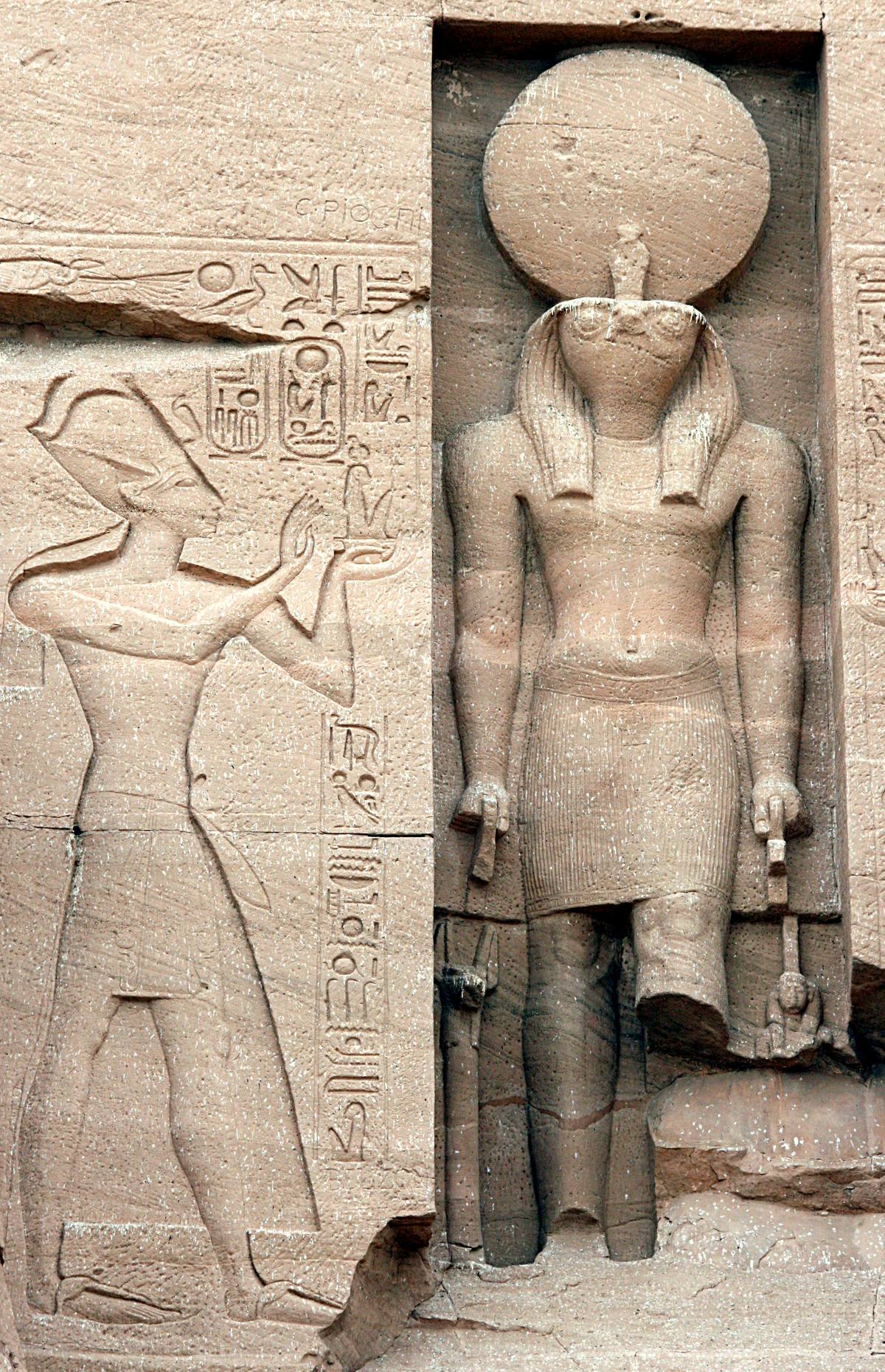
Ramesses, Amun-Ra and Ra-Horakhty are bathed in gold. Ptah, god of the underworld, is left in shadow. Light and darkness, held in perfect balance, in the heart of the mountain.
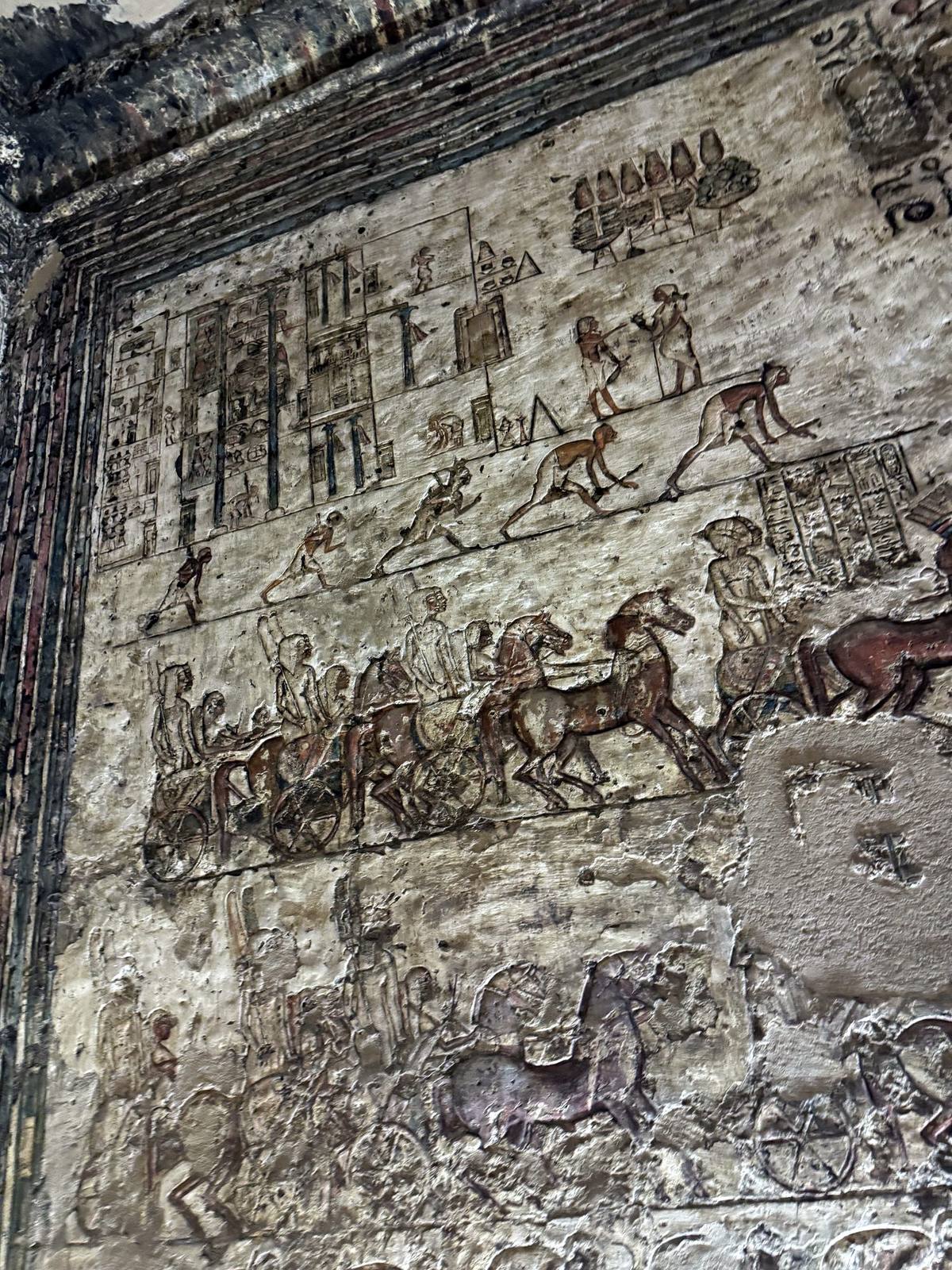
The King Who Made Himself a God
Ramesses II ruled for sixty-six years and built more than any other pharaoh. Abu Simbel was his boldest statement: a temple at the very edge of his kingdom where he could be worshipped beside the great gods. It was a message to Nubia and to eternity.
But the most moving part of the site is not his.
For Whom the Sun Shines
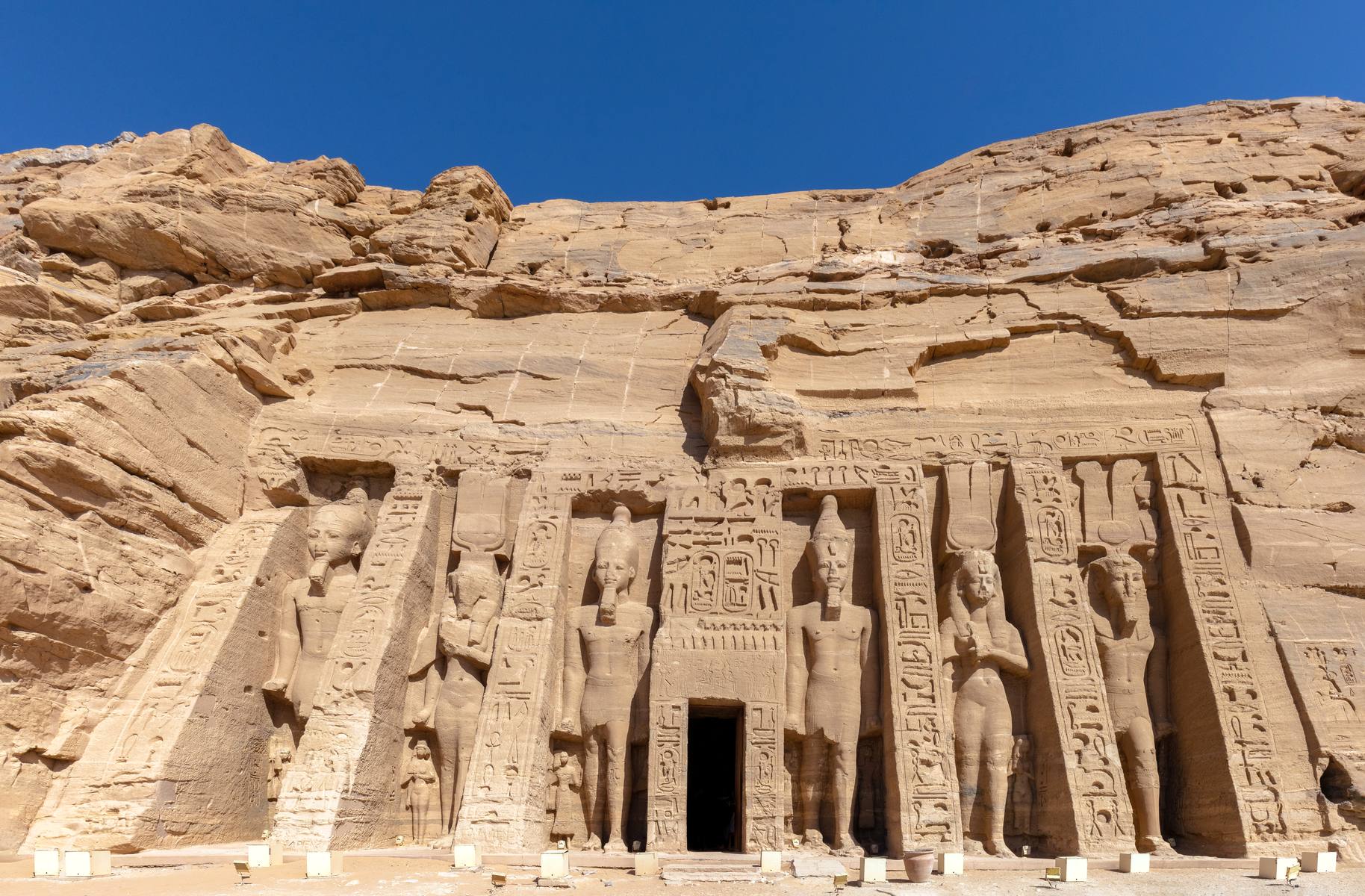
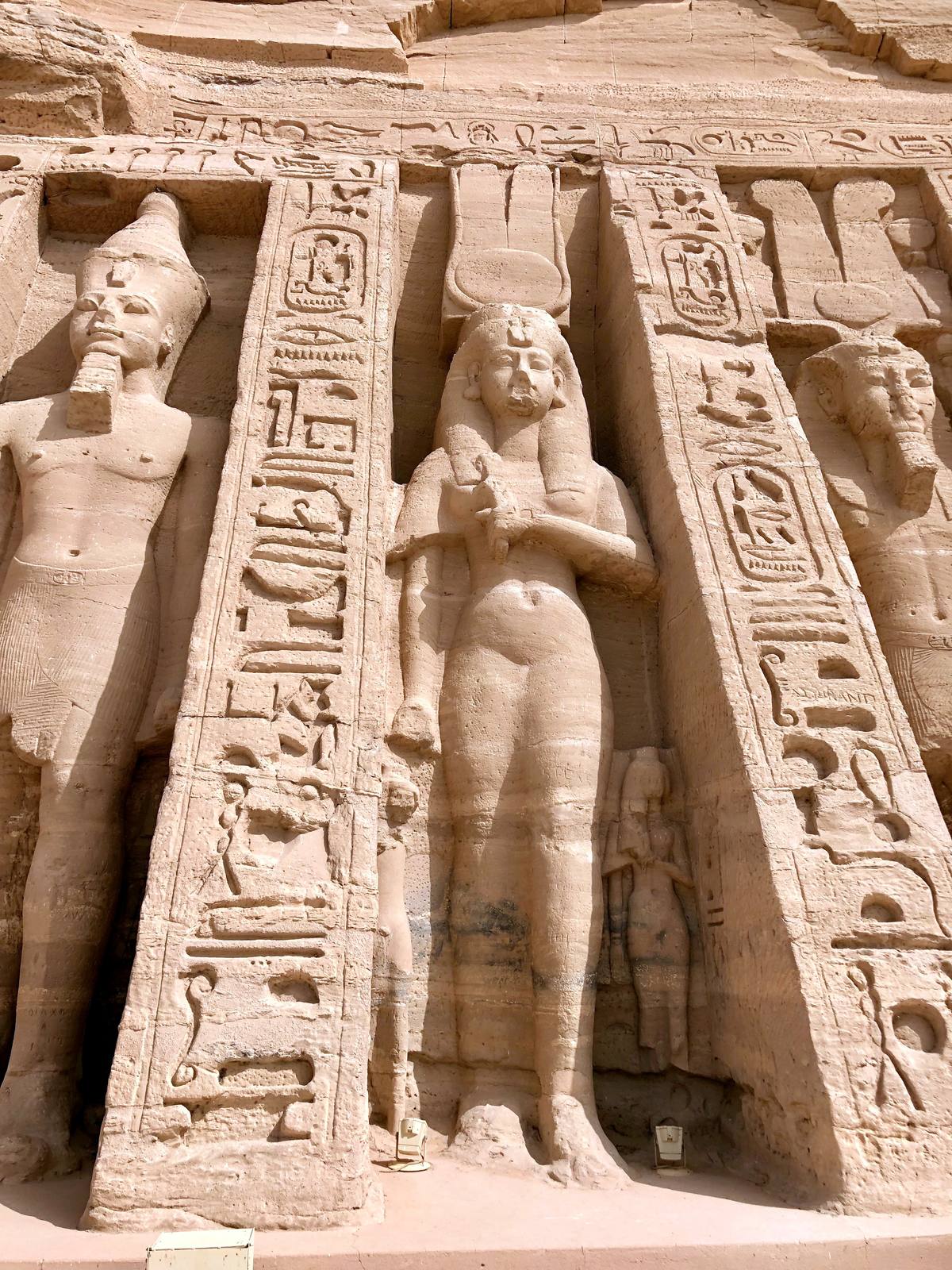
Beside the great temple stands a smaller one, dedicated to Hathor and to Nefertari, his Great Royal Wife. On its facade, Nefertari’s statues stand the same height as the king’s, a rare honour in Egyptian art. An inscription calls her the one for whom the sun shines. Inside, she is shown crowned by the goddesses, offering flowers and sistra to Hathor, goddess of love, music and joy.
The two temples stand side by side, facing the same sunrise. It is the Hieros Gamos written in mountain stone: the sovereign masculine and the radiant feminine, each honoured in full, each incomplete without the other.
Only when both temples face the same dawn does the mountain become whole.
Moved, Yet Unbroken
In the 1960s, as the waters of the new dam rose, both temples were cut into great blocks and lifted, piece by piece, to higher ground. The alignment was recreated with astonishing care. The sun still finds its way into the sanctuary.
There is a teaching in that for every seeker in the middle of the Great Work. You can be taken apart and rebuilt and still keep your orientation to the light, if you know where your east is.
A Practice: The Light Reaching In
Sit in a darkened room and imagine a single ray of dawn entering through a doorway and travelling slowly inward, through hall after hall, into the deepest sanctuary of your heart. What does it illuminate? What does it leave, wisely, in shadow? Rest there until you feel the warmth.
Read More on the Blog
- What Is Hieros Gamos? The Sacred Marriage Egypt Never Forgot
- Couples’ Pilgrimage: Why Lovers Come to Egypt to Remember Each Other
Feel called to walk this path?
Book a private call with Kristina to learn about the retreats: The Great Work Pilgrimage and Hieros Gamos: The Sacred Union, or a one-to-one Private Initiation Journey, where Kristina holds personal initiations and activations for you at Egypt’s sacred sites.
Book a private call with KristinaHeader photo: Abu Simbel, façade of the Great Temple (6201194723) by Arian Zwegers, CC BY 2.0, via Wikimedia Commons
Photo: Templo de Nefertari, Abu Simbel, Egipto, 2022-04-02, DD 153 by Diego Delso, CC BY-SA 4.0, via Wikimedia Commons
Photo: Facade Detail, Temple of Hathor and Nefertari, Abu Simbel, AG, EGY (48016649331) by Warren LeMay, CC0, via Wikimedia Commons
Photo: Abu Simbel 0225 by Hedwig Storch, CC BY 3.0, via Wikimedia Commons
Photo: Templo de Ramsés II, Abu Simbel, Egipto, 2022-04-02, DD 59-61 HDR by Diego Delso, CC BY-SA 4.0, via Wikimedia Commons
Photo: Templo de Ramsés II, Abu Simbel, Egipto, 2022-04-02, DD 29-31 HDR by Diego Delso, CC BY-SA 4.0, via Wikimedia Commons
Photo: Templo de Ramsés II, Abu Simbel, Egipto, 2022-04-02, DD 03 by Diego Delso, CC BY-SA 4.0, via Wikimedia Commons
Photo: Sunrise, Abu Simbel (2427684925) by Jerome Bon, CC BY 2.0, via Wikimedia Commons