What Really Happened in an Egyptian Temple Initiation?
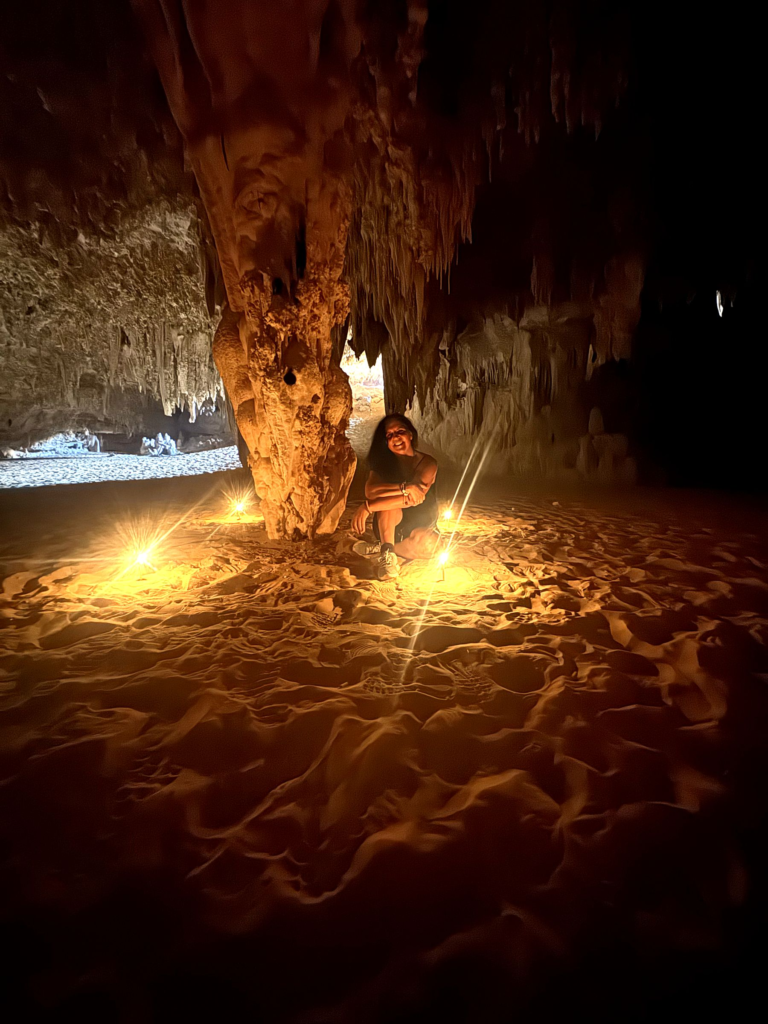
They say initiates were sealed in darkness and emerged with new names. What would you have to leave behind to walk out new?
The idea of the Egyptian mystery school has captured imaginations for centuries. Candlelit chambers. Secret teachings. Seekers who passed through ordeals and came out transformed. But how much of it is history, and how much is legend?
In this article we’ll explore what the evidence actually says about initiation in ancient Egypt, what the mystery traditions claim, the timeless archetype of initiation, and how modern pilgrims can experience something of it ethically and safely.
What the Historical Evidence Says
The honest answer is that our evidence is limited. Egyptian temples were closed to ordinary people; only priests could enter the inner sanctuaries. Priests underwent purification, shaving, washing in sacred lakes, and observances before serving the gods. Some temple texts describe priests being “introduced” to the god’s presence.
We also know of sacred knowledge restricted to certain people. Texts like the Book of the Dead and the Amduat, painted on tomb walls, describe the soul’s journey through the underworld and the secret names and words it must know. Read about these in Luxor Temple and the Valley of the Kings.
At Abydos, the mysteries of Osiris were enacted every year, with some parts public and others hidden. The official Ikhernofret left a stela describing his role. See Abydos and the Flower of Life.
The Mysteries of Isis
The clearest ancient account of an initiation connected to Egypt comes from the Roman era. In The Golden Ass (also called Metamorphoses), written by Apuleius in the second century CE, the hero Lucius is initiated into the mysteries of Isis. He describes fasting, purification and a night of revelation in which he “approached the boundary of death” and saw the sun shining at midnight. He is careful not to reveal the details.
By then the cult of Isis had spread across the Roman world. Her initiates experienced a symbolic death and rebirth under her protection. Meet Isis in The Temple of Isis at Philae.
What the Mystery Traditions Claim
Later esoteric writers, from Renaissance Hermeticists to nineteenth- and twentieth-century occultists, built rich traditions around Egyptian initiation. Some describe initiates spending a night alone in the sarcophagus of the King’s Chamber. Others speak of hidden halls beneath the Sphinx, or schools of wisdom inherited from Atlantis. In Lisa Renee’s Ascension Glossary, Egypt’s sacred sites are described within a larger cosmology of stargates and consciousness.
These accounts belong to the mystery tradition rather than to documented history. I share them because they carry meaning for seekers, not because they are proven. For more, see Rubedo in the King’s Chamber and The Sphinx and the Hall of Records.
The Archetype of Initiation
Across cultures, initiation follows a pattern described by anthropologist Arnold van Gennep: separation, transition and incorporation. You leave your old world. You pass through a threshold, often a time of ordeal or darkness. And you return with a new identity.
The alchemists described it as the nigredo and the stages that follow. The myths of Egypt describe it as Osiris dying and rising, and the sun travelling through the night to be reborn.
Initiation in My Own Experience
On my own journey I didn’t undergo a secret rite. But I did experience what I can only call initiation. At Giza, with private access for my group, “no words can explain this sacred process”. And in a tomb at Amarna:
I sat in a tomb and closed my eyes. During meditation, I felt an opening at my crown. Images and impressions flooded in. Something I experienced as memories. I stayed there, letting it unfold.
Separation, threshold, return. That is initiation.
Modern Initiation Done Ethically
- No ordeals for their own sake. Safety and wellbeing come first.
- Consent and choice. Every practice is an invitation, never a requirement.
- Honest framing. Lore is shared as lore, history as history.
- Integration. Time and support to make sense of what arises.
- Respect. For Egypt, its people and its sacred sites.
These principles guide The Great Work Pilgrimage and the Hieros Gamos retreat.
Signs You Are Being Initiated Now
- An old identity no longer fits, and the new one hasn’t yet formed
- You feel drawn to places, symbols or stories without understanding why
- Dreams and synchronicities are intensifying
- You are being asked to let go of something you thought you couldn’t live without
Initiation doesn’t only happen in temples. Life initiates us constantly, through loss, love, illness, travel and awakening. A pilgrimage simply gives that process a conscious container. It says: I see what is happening to me, and I choose to walk through it with intention.
As I wrote after Amarna: perhaps you’re thinking of something now. That fascination you rarely talk about. The experience you’ve never quite found words for. That may be your initiation calling.
The Threshold Is Always Here
The ancient temples were built in stages: open courts, then shaded halls, then the dark sanctuary. Each step asked more of the one who entered. Your life is built the same way. You don’t need to be ready for the sanctuary today. You only need to take the next step across the next threshold.
Frequently Asked Questions
Were there mystery schools in ancient Egypt?
Evidence shows restricted priestly knowledge and temple rituals, but the idea of formal mystery schools comes largely from later Greek, Roman and esoteric sources.
What were the mysteries of Isis?
Initiation rites of the Greco-Roman cult of Isis, involving purification and a symbolic death and rebirth, described by Apuleius in The Golden Ass.
What were the mysteries of Osiris?
Annual sacred dramas at Abydos re-enacting Osiris’s death and resurrection.
Did initiates sleep in the King’s Chamber?
This is a popular esoteric tradition, but there is no ancient evidence for it.
Can I experience initiation in Egypt today?
Many pilgrims experience profound inner shifts through meditation and ritual at sacred sites, done safely and respectfully.
Continue the Journey
If this article stirred something in you, these may be the next threads to follow:
- Abydos and the Flower of Life: What Hides in the Osireion
- Before the Sphinx: A Giza Initiation Through the Great Pyramid
- Nigredo in the Desert: The Holy Dissolution Nobody Warns You About
Your Invitation
On The Great Work Pilgrimage, initiation is lived, safely and ethically, through Egypt’s sacred places and the inner work they awaken.
👉 Discover the Great Work Pilgrimage
Not sure yet? Book a free 20-minute discovery call and we’ll feel into whether this is your season.
What would you leave behind? Come closer.
With love,
Kristina
Leave a Reply