Nigredo in the Desert: The Holy Dissolution Nobody Warns You About
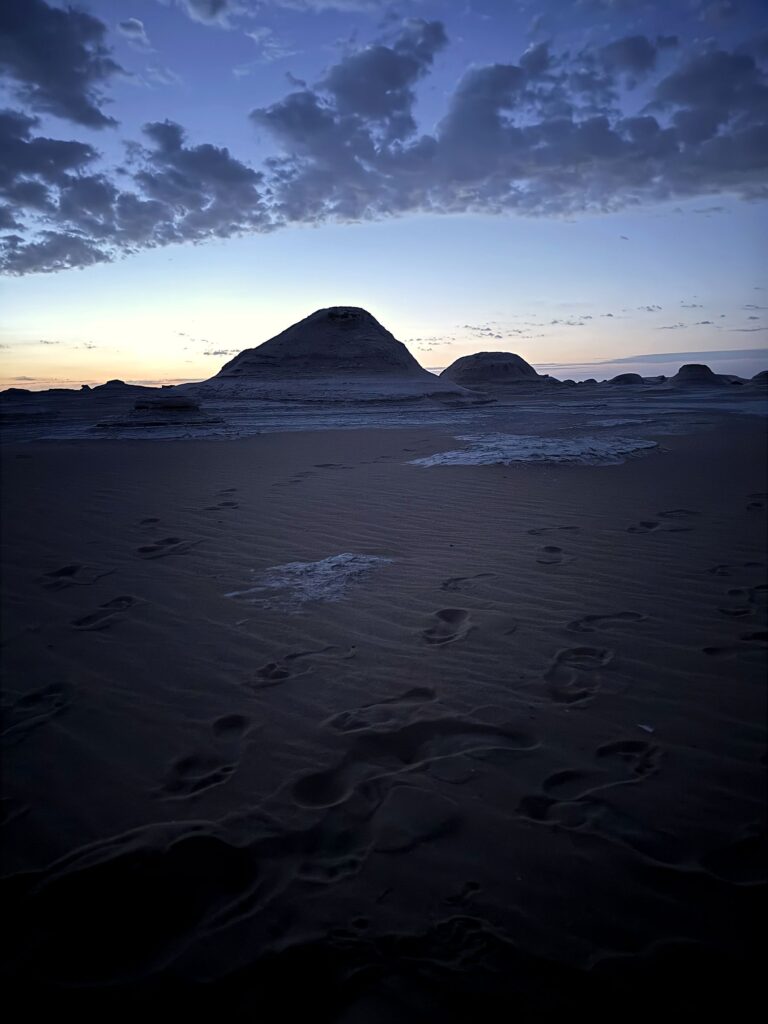
If your life is falling apart in a way that feels strangely sacred, you may not be breaking. You may be beginning.
You know the feeling. The old identity no longer fits. The work that once lit you up feels hollow. Relationships, beliefs, even your sense of who you are seem to be dissolving in your hands. Friends tell you to stay positive. Something deeper tells you this darkness has a purpose.
The alchemists had a word for it. They called it nigredo, the blackening. And they insisted it was not a mistake on the path. It was the first stage of the Great Work.
In this article we’ll explore the meaning of the nigredo stage, how it relates to the dark night of the soul, the Egyptian myth that serves as its template, and how to move through it without abandoning yourself.
What Is Nigredo?
In the Western alchemical tradition, the Great Work (the Magnum Opus) moves through four classic stages: nigredo (blackening), albedo (whitening), citrinitas (yellowing) and rubedo (reddening). Alchemical texts describe the nigredo as putrefaction and decomposition, the moment when the raw material is broken down in the sealed vessel until it turns black.
Read spiritually, as many seekers since Carl Jung have read it, the nigredo is the dissolution of the old self. The ego’s structures soften. What was hidden rises to the surface. Grief, shadow and confusion come up to be seen. Nothing new can be built until the old form has been released.
In The Black Earth Within, I wrote about Kemet, the Black Land, Egypt’s own name for the fertile dark soil left by the Nile flood. The nigredo is that soil inside you: dark, yes, but alive with everything that is about to grow.
The Dark Night of the Soul
The phrase “dark night of the soul” comes from the sixteenth-century Spanish mystic St John of the Cross, who described a painful passage in which familiar consolations fall away so that the soul can be drawn into deeper union. Today it is used for any season of spiritual crisis that strips you back to the essentials.
The nigredo and the dark night describe the same truth from two traditions. The darkness is not punishment. It is preparation.
Osiris Dismembered: The Egyptian Template
Egypt holds the most powerful myth of dissolution ever told. Osiris, the good king, is murdered by his brother Set. In the later versions of the story, preserved most fully by the Greek writer Plutarch, his body is torn into pieces and scattered across the land.
And yet this is not the end. Isis searches for every piece and gathers him again. Osiris becomes lord of the underworld and the god of resurrection, and through him every soul in Egypt hoped to rise. You can read the full myth in Isis and Osiris: The Love Story That Raised the Dead.
In the mystery tradition, the dismemberment of Osiris is read as the nigredo in mythic form. We are taken apart so that we can be put back together in truth.
Why the Desert?
The desert is the nigredo made visible. There is nothing to hide behind. No noise, no distraction, only sand, sky and your own heartbeat. Ancient Egyptians called the desert the Red Land, Deshret, the realm of chaos beyond the ordered fertile valley. To walk into it is to step outside the life you know.
And yet the desert is also where Egypt surprised me with laughter. On my journey there were evenings of desert adventures at sunset and beyond, and one night we drove back across the top cliffs when it was pitch black.
Driving back across the top cliffs when it was pitch black… now that was an experience.
That is the nigredo. You can’t see the road. You trust the driver, the vehicle and the ones beside you. And somehow, you arrive. Then there was the sand dune:
Apparently my path to enlightenment involves going backwards down a sand dune.
I still laugh at that. But it holds a truth. Sometimes the way forward looks like going backwards. Sometimes the descent is the path.
In Lisa Renee’s Teaching
In Lisa Renee’s Ascension Glossary, spiritual awakening is described as a process that brings old patterns, trauma and distortions to the surface so they can be cleared. She also writes at length about the symptoms people may feel during accelerated change. Whether you hold her teachings as literal or as a map, they speak directly to the nigredo: what rises is rising to be released.
How to Move Through Your Nigredo
- Stop fighting the dark. Let it be what it is. Resistance prolongs the process.
- Seal the vessel. Alchemists sealed their flask. Protect your energy. Not every season needs to be shared with everyone.
- Keep a record. Write what rises. Dreams, memories and grief often hold the key to the next stage.
- Find a held container. You don’t have to walk this alone. Guidance and a circle make the dark navigable.
- Remember the soil. Black earth grows the richest harvest.
This is exactly why I created a held space for this work on The Great Work Pilgrimage: to walk the stages of the Great Work in Egypt, together, with care.
Why You Don’t Have to Walk It Alone
The alchemists worked in laboratories, but they never imagined the work happening in a vacuum. There was always a teacher, a text, a tradition. In the same way, the nigredo is far gentler when it is held. A circle of fellow travellers reminds you that you are not broken. A guide helps you tell the difference between dissolution that heals and despair that needs more support. And a sacred place, like Egypt’s temples and deserts, gives the process a container larger than your own fear.
If you are in your nigredo now, please be gentle with yourself. Seek support from people you trust, and from qualified professionals if the darkness feels too heavy. Spiritual work is not a substitute for care. It is a companion to it.
Frequently Asked Questions
What is the nigredo stage in alchemy?
Nigredo, or blackening, is the first stage of the alchemical Great Work, describing the breakdown of matter into a dark, decomposed state. Spiritually it represents the dissolution of the old self.
Is nigredo the same as the dark night of the soul?
They come from different traditions, alchemy and Christian mysticism, but both describe a painful season of dissolution that prepares the soul for renewal.
How long does the nigredo last?
There is no set length. For some it is weeks; for others, years. Support, honest reflection and a sense of meaning can help it move.
What comes after nigredo?
Albedo, the whitening, a stage of purification and clarity, followed by citrinitas (yellowing) and rubedo (reddening).
How does Osiris relate to nigredo?
In the mystery tradition, the dismemberment of Osiris and his restoration by Isis are read as a mythic picture of dissolution followed by rebirth.
Continue the Journey
If this article stirred something in you, these may be the next threads to follow:
- The Black Earth Within: Why the Great Work Begins in Egypt
- Isis and Osiris: The Love Story That Raised the Dead
- Citrinitas at Karnak: The Yellowing, the Sun, the Awakened Mind
Your Invitation
On The Great Work Pilgrimage, Egypt becomes the sealed vessel. We walk the stages of transformation together, in temples and deserts that have held seekers for thousands of years.
👉 Discover the Great Work Pilgrimage
Not sure yet? Book a free 20-minute discovery call and we’ll feel into whether this is your season.
The blackness is not your ending. Come closer.
With love,
Kristina
Leave a Reply