The Mound of First Time: The Story of the Giza Plateau
Before there was anything, there was water.
Dark, boundless, motionless water, stretching in every direction without surface or floor. The Egyptians called it Nun. It had no light, no time, no shape. It simply was, holding within it every possibility that would ever be.
And then, in the story the priests of Heliopolis told, something stirred. From the depths of Nun a mound of earth rose up, the first dry land, the first place. Upon it stood Atum, the self-created one, who had brought himself into being. The Egyptians called that moment Zep Tepi, the First Time.
The Shape of Creation
The mound was remembered in stone. At Heliopolis a sacred pyramid-shaped stone, the Benben, was honoured as the place where the first rays of the sun touched the newborn world. In the myth, the Benu bird, a radiant heron, alighted upon it and cried out, and with that cry time itself began.
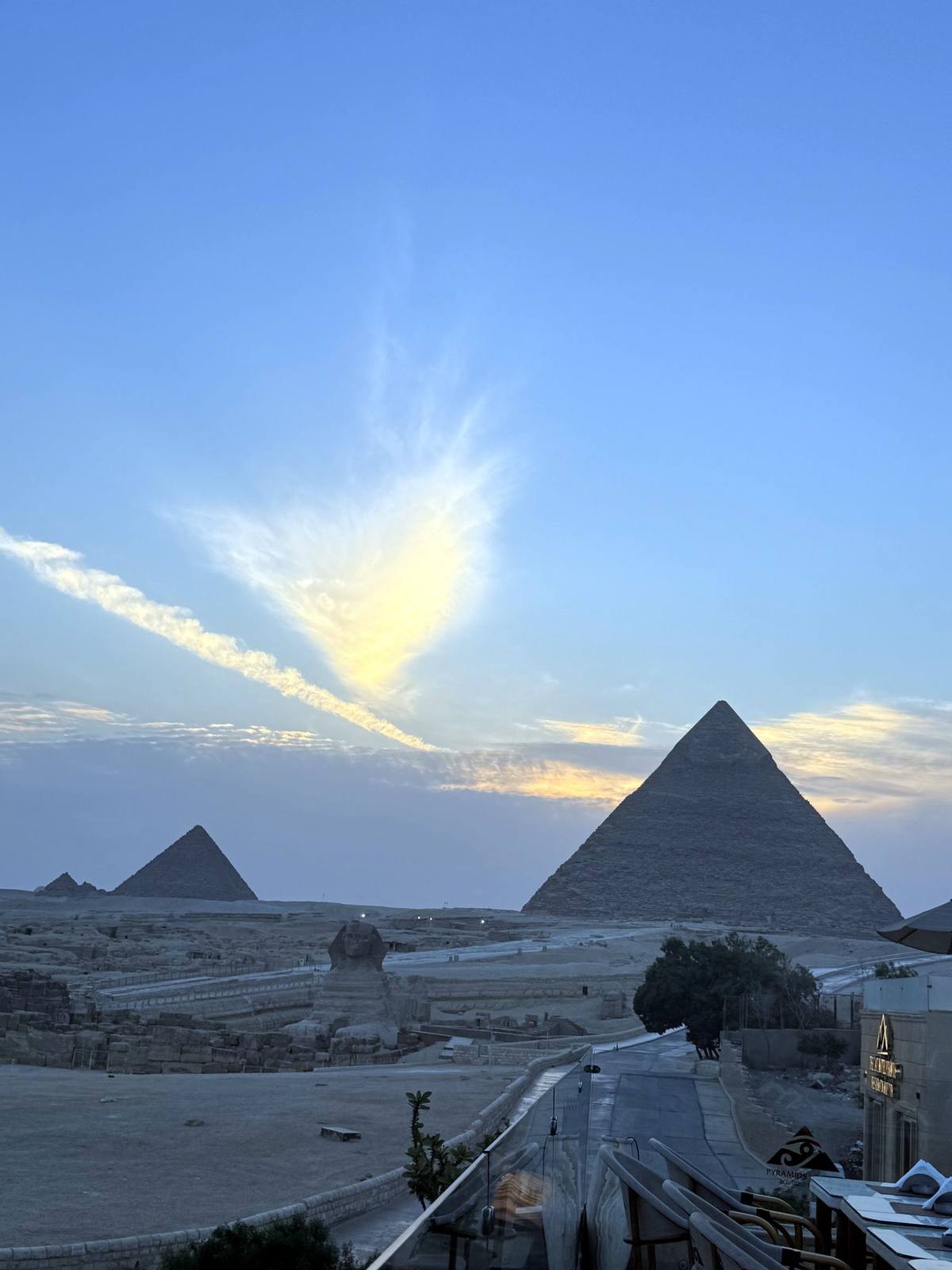
Many scholars see in the Benben and the primeval mound part of the meaning of the pyramid shape itself. When the kings of the Fourth Dynasty raised their monuments on the Giza Plateau, they were building mountains of creation: places where a soul, like the sun at dawn, might rise from the dark waters of death into eternal light.
The Great Pyramid was called Akhet Khufu, the Horizon of Khufu. The horizon was the threshold where the sun was born each morning and returned each evening. To build a horizon was to build a doorway between worlds.
The King Who Sought Thoth’s Secret
A story preserved in the Westcar Papyrus, written down many centuries after Khufu’s reign, tells how the great king grew restless. He longed to know “the number of the secret chambers of the sanctuary of Thoth”, so that he might make something like them for his own horizon.
His son told him of a magician named Djedi, a man of one hundred and ten years who could reattach a severed head and make a lion walk meekly behind him. Khufu summoned him. Djedi performed his wonders, but when asked for the secret, he refused to reveal it himself. The knowledge, he said, would come in its own time, through another line of kings yet unborn.
It is a tale, not a history. Yet it carries a teaching the mystery traditions have always understood: the deepest knowledge cannot be seized, not even by a king. It is revealed when the time is right, to the one who is ready.
What the Stones Say
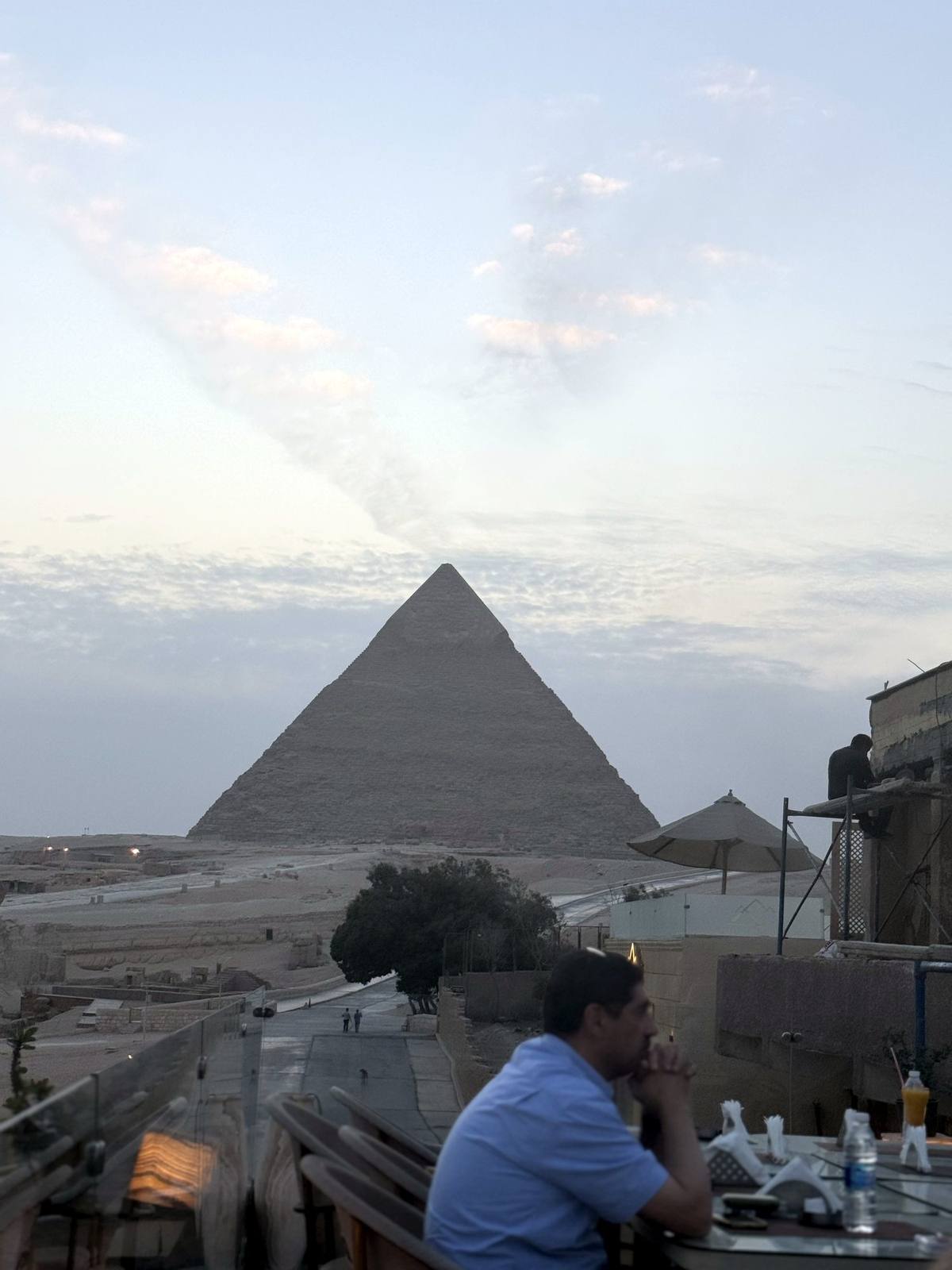
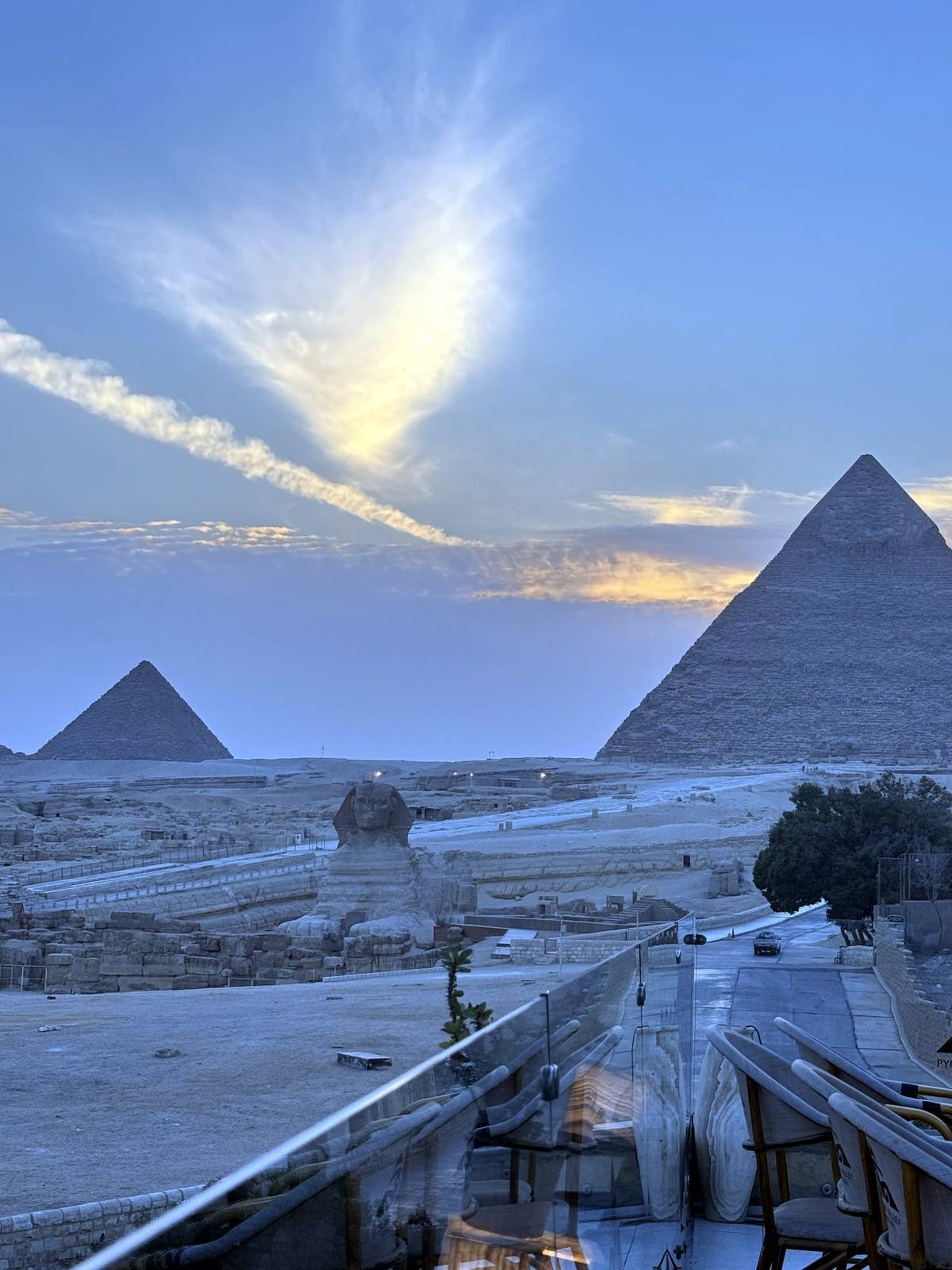
Egyptologists attribute the Great Pyramid to Khufu, around 2560 BCE, built by organised crews of skilled workers whose villages and bakeries have been excavated nearby. Its sides align almost perfectly to the cardinal points. Inside, the Grand Gallery rises toward a chamber of red granite brought from the far south. You can read more in Rubedo in the King’s Chamber.
In Lisa Renee’s Ascension Glossary, Giza is described as a planetary stargate and the heart of the Earth. That is her esoteric teaching, not Egyptology, but for many pilgrims it names what they feel when they first step onto the plateau: a pulse, a presence, a homecoming.
The Mound Within You
The story of the First Time is not only about the beginning of the world. In the mystery tradition, it is about the beginning of you.
Each of us has known the waters of Nun: seasons of formlessness, when nothing is clear and the old shapes of life have dissolved. The alchemists called it the nigredo. And each of us has felt, at some point, the first ground rising beneath our feet. A decision. A knowing. A sense of here, this is where I stand.
The Great Work begins on that mound. Not with having all the answers, but with the first dry land of truth rising out of the dark.
- Where in your life are you still in the waters of Nun?
- What small mound of certainty is already rising?
- What secret, like Khufu’s, are you trying to seize that may only come when you are ready?
On the Plateau
Kristina’s own words from Giza were simple: “Experiencing the majesty of the sphinx and the incredible energy.” And after her group was given private access to the pyramid and the Sphinx: “No words can explain this sacred process.”
No words, perhaps, because the mound of first time is not something you understand. It is somewhere you stand.
A Practice: Standing on the First Mound
The priests of Heliopolis honoured the moment of first emergence as the most sacred of all. You can honour it in your own life, wherever you are, with a simple ritual that takes no more than ten quiet minutes.
- Sit or stand somewhere you can feel the ground beneath you. Close your eyes and imagine the dark, still waters of Nun all around, formless and quiet.
- Breathe slowly. Let yourself acknowledge what in your life is still unformed: the questions, the uncertainty, the not-yet-knowing. Do not rush to fix it.
- Now imagine the ground rising beneath your feet, a small mound of solid earth lifting you above the waters. Feel its firmness.
- Ask: What is the one true thing I can stand on today? Wait for the answer. It may be a value, a decision, a person, a knowing.
- Imagine the first ray of the sun touching the top of your head, as it touched the Benben at the dawn of time. Let it warm you.
- Open your eyes and write down the one true thing. Carry it with you as your mound of first time.
Pilgrims who stand on the Giza Plateau often describe a sense of ancient ground beneath them, as if the bedrock itself remembers the First Time. But the mound is not only in Egypt. It rises wherever a soul chooses truth over the formless waters of fear. The Great Pyramid simply makes that choice visible in stone, on a scale that the heart never forgets.
Read More on the Blog
Feel called to walk this path?
Book a private call with Kristina to learn about the retreats: The Great Work Pilgrimage, or a one-to-one Private Initiation Journey, where Kristina holds personal initiations and activations for you at Egypt’s sacred sites.
Book a private call with Kristina