Amun the Hidden One and the Queen Who Raised the Sky: The Story of Karnak
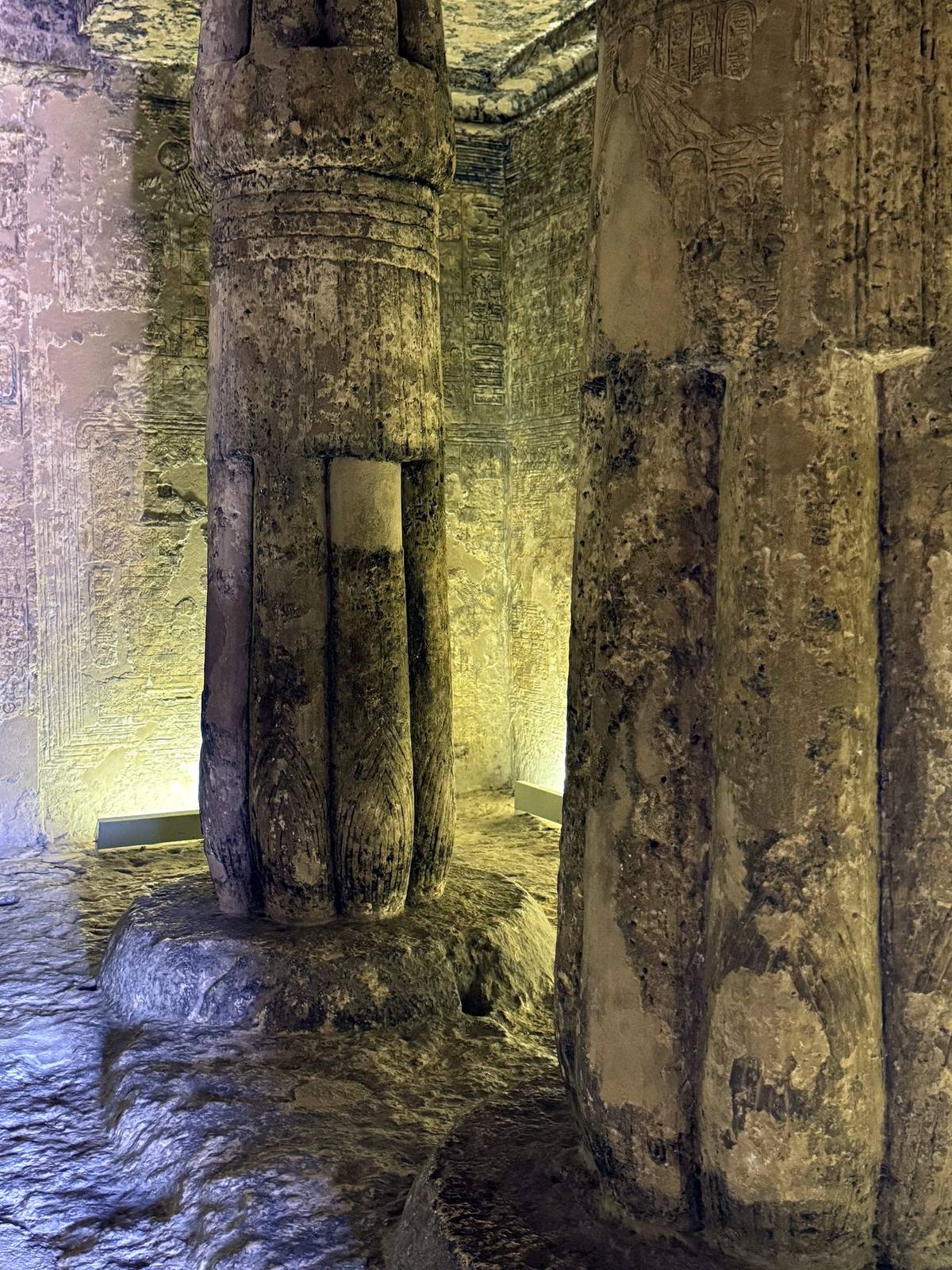
His name meant the hidden one.
No one knew his true form. He was invisible like the wind, present everywhere and seen nowhere. The priests of Thebes said that he was too great to be known, too mysterious to be fully named. He was Amun, and in his city stood the greatest temple the ancient world had ever seen.
The God Behind All Things
At first, Amun was a local god of Thebes. But as Theban kings rose to rule all of Egypt, Amun rose with them. He was joined with Ra, the visible sun, to become Amun-Ra, king of the gods: the hidden source and its radiant expression united in one divine being.
Hymns to Amun describe him as the one who made himself, whose form no one knows, who is far yet near, who hears the prayer of the poor. A Leiden papyrus hymn says that all the gods are three, Amun, Ra and Ptah, and yet he is one: his identity hidden as Amun, his face as Ra, his body as Ptah.
His home was Ipet-isut, “the most select of places”, which we call Karnak.
The Queen Who Became King
Among all the rulers who built at Karnak, one story shines with particular gold. Hatshepsut was a daughter of a king and the wife of a king. When her husband died and his heir was still a child, she ruled as regent, and then, around 1479 BCE, she did something extraordinary. She took the full titles of pharaoh.
Hatshepsut proclaimed herself the daughter of Amun. On the walls of her temple at Deir el-Bahari she told the story of her divine birth: how Amun visited her mother in the form of her father, filling the palace with the fragrance of the land of Punt, and how she was conceived of the god himself.
And at Karnak she raised obelisks to her father Amun. Two of them were among the tallest ever erected in Egypt, carved from single blocks of granite quarried at Aswan and floated down the Nile. Their inscriptions say their tips were covered in electrum, a gleaming alloy of gold and silver, so that they would catch the sun and “illuminate the Two Lands”. One of them still stands at Karnak today.
On its base she speaks to future generations: those who see her monument years from now and speak of what she has done. She was writing to us.
Hidden and Radiant
Karnak holds a great paradox. Its god is hidden, yet its monuments blaze with light. Its innermost sanctuary was dark and closed, yet its obelisks were designed to flash in the sun.
The mystery traditions see this paradox in every human being. There is a hidden self, unknown even to you, the Amun within. And there is the radiant self, the face you show the world, the Ra. The Great Work is the marriage of the two: the hidden essence becoming visible, the inner light rising to touch the sky.
The alchemists named this stage citrinitas, the yellowing: the dawning of solar light after the long darkness. You can explore it in Citrinitas at Karnak.
Raise Your Obelisk
Hatshepsut teaches something else too. She did not wait for permission to become what she was. She claimed her lineage from the divine and built monuments to say so.
- What part of you has been hidden, waiting to be seen?
- What “obelisk” would you raise, if you trusted your divine origin?
- What message would you leave for those who come after you?
In Lisa Renee’s Ascension Glossary, the awakening of solar consciousness is a recurring theme in the spiritual path. Whether you hold that teaching literally or symbolically, Karnak makes it tangible: a forest of stone columns, a hidden sanctuary and a shaft of gold pointing upward.
Among the Columns
Many pilgrims describe the same experience among Karnak’s colossal columns: the mind falls quiet and something older begins to speak. Kristina’s word for Luxor, the city that holds Karnak, was simple: “I’m in love.”
Perhaps that is what happens when the hidden one recognises itself in the light.
A Practice: The Hidden and the Radiant
Karnak’s god was both hidden and radiant. This practice invites you to meet both within yourself, and to let one illuminate the other.
- Find a quiet, dim space and sit comfortably. Close your eyes.
- Imagine walking into a vast temple of columns. With every step inward, the light grows softer, until you reach a small, dark sanctuary.
- Here dwells your hidden self. Simply be with it. What do you sense? What does it long for?
- Ask it: What part of you is ready to be seen?
- Now imagine walking back out through the columns into blazing sunlight, carrying that answer like a gilded obelisk.
- Open your eyes and write down one way you will let your hidden self be seen this week.
The Egyptians did not see the hidden and the radiant as opposites. Amun and Ra were joined as one. In the same way, your mystery does not have to stay locked in the sanctuary forever, and your radiance does not have to be shallow. When the hidden one is allowed into the light, it becomes something extraordinary, like a shaft of electrum-tipped granite catching the first rays of the dawn.
Read More on the Blog
Feel called to walk this path?
Book a private call with Kristina to learn about the retreats: The Great Work Pilgrimage, or a one-to-one Private Initiation Journey, where Kristina holds personal initiations and activations for you at Egypt’s sacred sites.
Book a private call with Kristina