The Nile as an Initiatory Path: A Sacred Journey From Aswan to Giza
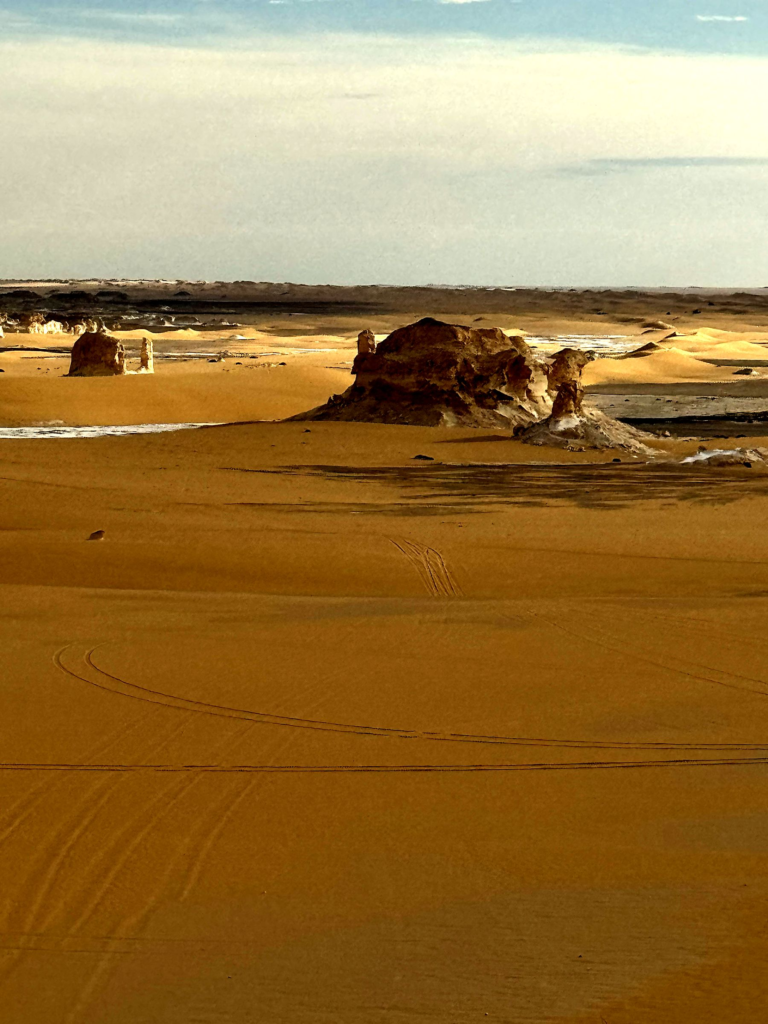
The river runs north, and so does the soul.
The Nile is one of the few great rivers in the world that flows from south to north. For the ancient Egyptians, this shaped everything: their map, their myths, their sense of direction. Upper Egypt lay to the south, Lower Egypt to the north. Life, quite literally, flowed down the river toward the sea.
In this article we’ll explore the Nile as an initiatory path, a sacred journey from Aswan to Giza, with each temple along the way as a station of the soul. I’ll share moments from my own journey, and why travelling in a held group can transform a holiday into a pilgrimage.
The Nile in Egyptian Thought
Egypt has been called the gift of the Nile, a phrase from the Greek historian Herodotus. Every year, before the modern dams, the river flooded, depositing the rich black silt that made farming possible. The Egyptians called their land Kemet, the Black Land, after that soil. I explore it in The Black Earth Within.
The flood was personified as the god Hapi. Osiris, whose death and return mirrored the cycle of the waters, was deeply linked to the river. The Nile was the road for gods and pharaohs alike. Sacred statues travelled by barque from temple to temple in great festivals.
The Journey as Initiation
In the mystery tradition, a journey down the Nile from south to north is read as the soul’s ascent: a series of initiations, each temple offering a different teaching. The order varies with each itinerary, but the principle remains: you are not just seeing sites. You are moving through stages.
Station 1: Aswan and the Temple of Isis
The journey often begins in the far south, at Aswan, where the river is studded with granite islands and feluccas drift on the wind. Nearby lies the Temple of Isis at Philae, the great mother’s island sanctuary. On my journey, the Isis Temple was one of the most powerful experiences of all:
Isis temple… wow! So stunning! Huge activation and ascension symptoms too.
Read more in The Temple of Isis at Philae.
Station 2: Kom Ombo and Edfu
Sailing north, the river carries you to Kom Ombo, the double temple of Sobek and Horus the Elder, a living lesson in sacred duality (see Couples’ Pilgrimage). Then Edfu, the magnificent temple of Horus, where the sovereign masculine stands guard (see Edfu, Horus and the Return of the Sovereign Masculine).
And between the temples, life on the river: galabaya shopping, getting geared up for the festivities, and a night I’ll never forget.
What an amazing night – Galabya party on the Nile. These ladies know how to have fun!
Station 3: Luxor, the Valley of the Kings and Karnak
Luxor, ancient Thebes, is the heart of the journey: Luxor Temple, Karnak and, across the river, the Valley of the Kings.
Luxor… I’m in love… majestic temples, stunning water outlook, and a palace of a hotel.
Hot air ballooning over the Valley of the Kings… speechless.
Explore further in Luxor Temple, the Temple of Man and the Valley of the Kings and Citrinitas at Karnak.
Station 4: Dendera
North of Luxor lies Dendera and the Temple of Hathor, goddess of love and joy. For me it was a place of deep healing:
A divine healing process connected to the high priestess. Activations, healing, Atlantis and birthing. Words cannot explain.
See Dendera Temple of Hathor. Further north still lies Abydos, the sacred city of Osiris (see Abydos and the Flower of Life).
Station 5: Amarna
In Middle Egypt lies Amarna, the city of Akhenaten and Nefertiti. I extended my trip so I could experience it, and it became a homecoming:
When I arrived, it was magical. I felt wrapped in the warmest hug. Tenderness. Familiarity. This incredible joy. Home.
Read the full story in Akhenaten and the Aten.
Station 6: Fayoum and the Desert
Near Cairo, the Fayoum oasis holds the ancient Meidum Pyramid and wild desert landscapes. Something fascinating happened inside the Meidum Pyramid, and in the desert there were sunset adventures, a pitch-black drive across the top cliffs, and one sand dune I went down backwards. Read about the desert as dissolution in Nigredo in the Desert.
And always, the singing:
Yes I love dancing and singing in the 4WD with my clients and Egyptian team whilst driving in the desert. Everyone joins in!!!
Station 7: Giza
The journey reaches its summit at Giza: the Sphinx and the Great Pyramid. Some itineraries begin here, some end here, but it is always a culmination.
Private access to the pyramid and sphinx done. That means only my group has access, no one else. No words can explain this sacred process.
Read more in Before the Sphinx.
What a Held Group Adds
- Safety and ease. Logistics, local guides and transport are taken care of, so you can be present.
- Depth. Each temple is approached with intention, ritual and meditation.
- Integration. Time to process what rises, with support.
- Joy. Shared laughter, dancing and celebration with people who understand.
This is the shape of The Great Work Pilgrimage, and of the Hieros Gamos retreat.
How to Prepare for a Nile Pilgrimage
- Set an intention. What are you hoping to release, and what are you ready to receive?
- Read the myths. Isis and Osiris, Hathor and Horus. Stories make the temples come alive.
- Pack for the desert and the temples. Light, modest clothing, a hat, comfortable shoes, and something festive for a galabaya night.
- Leave space. Don’t over-plan. The river has its own rhythm.
Frequently Asked Questions
What is a Nile spiritual journey?
A journey along the Nile visiting Egypt’s sacred temples with intention, meditation and ritual, treated as a pilgrimage rather than simple sightseeing.
Why does the Nile flow north?
The Nile flows from its sources in East and Central Africa northward to the Mediterranean, following the slope of the land.
Which temples are on a Nile cruise?
Typical cruises between Aswan and Luxor visit temples such as Kom Ombo and Edfu, with Philae, Karnak and Luxor Temple often included.
How long is a Nile spiritual journey?
Itineraries vary. A full pilgrimage from Aswan to Giza with time for integration usually takes around two weeks.
Which retreat should I choose?
The Great Work Pilgrimage focuses on inner alchemy; Hieros Gamos focuses on sacred union. Contact us if you’re unsure.
Continue the Journey
If this article stirred something in you, these may be the next threads to follow:
- Before the Sphinx: A Giza Initiation Through the Great Pyramid
- The Temple of Isis at Philae: Mysteries of the Great Mother
- Luxor Temple, the Temple of Man and the Valley of the Kings
Your Invitation
On The Great Work Pilgrimage, the Nile becomes your initiatory path, one temple at a time, held in a small, intimate group.
👉 Discover the Great Work Pilgrimage
Not sure yet? Book a free 20-minute discovery call and we’ll feel into whether this is your season.
The river is calling. Come closer.
With love,
Kristina
Leave a Reply