The Sphinx, the Hall of Records and the Memory Waiting to Wake in You
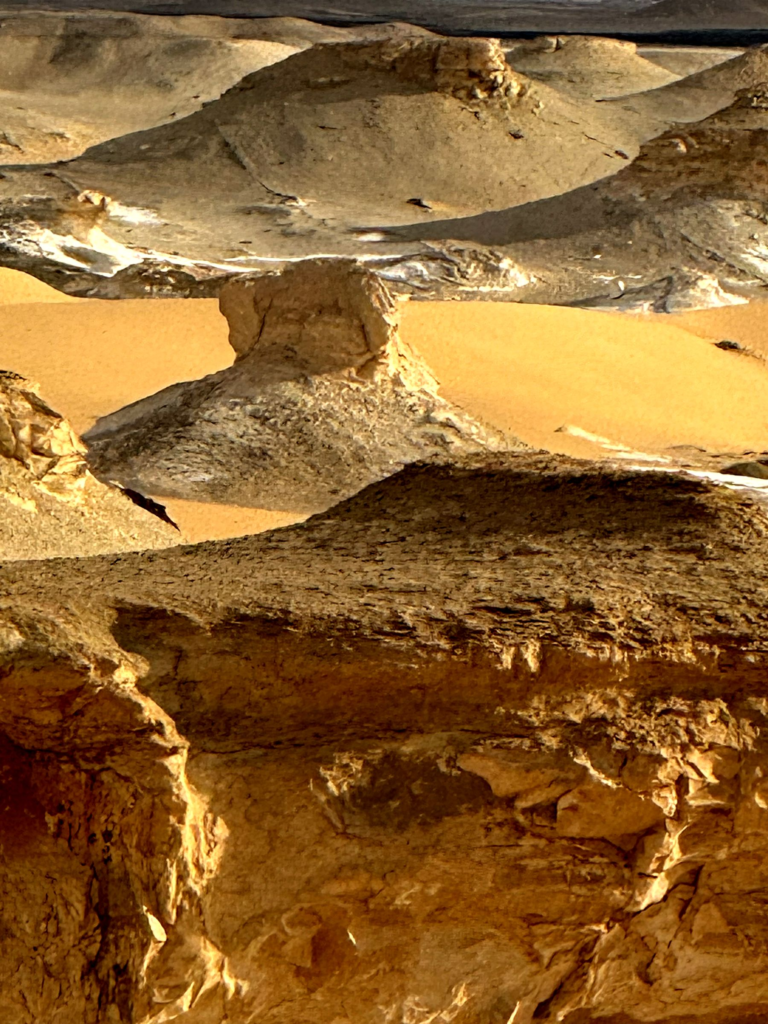
It faces due east, waiting for the sun. And some say, waiting for us.
The Great Sphinx of Giza is one of the most recognisable monuments on Earth, and one of the most mysterious. Who carved it? When? And is there really a hidden chamber beneath it, holding the records of a lost civilisation?
In this article we’ll explore what Egyptologists say about the Sphinx, the alternative theories that challenge them, the legend of the Hall of Records, and why the idea of a hidden memory speaks so deeply to the soul.
The Great Sphinx: What Egyptologists Say
The Great Sphinx is carved directly from the limestone bedrock of the Giza plateau. It has the body of a lion and the head of a king wearing the royal nemes headdress. It is about 73 metres long and 20 metres high.
Most Egyptologists attribute it to the pharaoh Khafre, around 2500 BCE, based on its position beside Khafre’s causeway and valley temple and on the style of the face. Between its paws stands the Dream Stela of Thutmose IV, which tells how the young prince fell asleep in the Sphinx’s shadow and dreamed it promised him the throne if he cleared away the sand that buried it.
In later times the Sphinx was worshipped as Horemakhet, “Horus in the Horizon”, a form of the sun god rising in the east.
The Water Erosion Hypothesis
In the early 1990s the geologist Robert Schoch, working with the writer John Anthony West, argued that the deep, rounded weathering on the walls of the Sphinx enclosure was caused by prolonged rainfall. Since such rainfall belongs to a wetter climate far earlier than Khafre, they proposed that the Sphinx might be thousands of years older than conventionally believed.
Most Egyptologists and many geologists reject this, offering other explanations for the weathering. The debate continues. I share it as a theory, not a conclusion, but it’s one of the reasons the Sphinx still feels like an open question.
Edgar Cayce and the Hall of Records
The idea of a Hall of Records beneath the Sphinx comes largely from Edgar Cayce, the American psychic known as “the Sleeping Prophet”, who gave thousands of trance readings in the early twentieth century. Several readings described a chamber, or a series of chambers, near the Sphinx holding the records of Atlantis, and predicted they would one day be found.
Archaeologists have found natural cavities and tunnels around the Sphinx, but no hall of records. The legend lives on in the mystery tradition. You can explore the Atlantis story in Atlantis in Egypt?
Lisa Renee’s Framing
In Lisa Renee’s Ascension Glossary, the Sphinx, the Great Pyramid and the Hall of Records are woven into her teaching about Giza as a planetary stargate and the heart of the Earth (see Giza as the Heart of the Earth). In her cosmology, records are not only physical: they are memory held in the energetic field of the planet and of people. This is her teaching, shared as such.
The Memory Waiting to Wake in You
Whether or not a physical hall exists, the legend points to something many seekers feel: that there is memory in us older than this life, waiting to be remembered.
I’ve experienced something like that. In Amarna, sitting in a tomb in meditation:
Images and impressions flooded in. Something I experienced as memories. I stayed there, letting it unfold.
And at Giza, before the Sphinx itself:
Experiencing the majesty of the sphinx and the incredible energy.
Maybe the true Hall of Records is not under the Sphinx. Maybe it’s in you, and the Sphinx is the guardian that reminds you to look.
The Sphinx as Guardian
Across mystery traditions, the Sphinx is seen as a guardian of a threshold: strength and wisdom, animal and human, instinct and intelligence. To pass the guardian, you must be ready. Not perfect, but willing. I wrote about this in Before the Sphinx.
A Practice: Remembering
- Sit facing east at dawn, like the Sphinx.
- Close your eyes and ask: what am I ready to remember?
- Notice images, sensations or words that rise. Don’t judge them.
- Write them down. Return to them over days and weeks.
- Let the memory unfold at its own pace.
This is part of the inner work of The Great Work Pilgrimage.
Visiting the Sphinx
Most visitors see the Sphinx from the viewing terrace beside Khafre’s valley temple. Arrive early, before the crowds, when the low eastern light touches its face. Notice how it gazes toward the sunrise. In ancient times, this alignment was sacred: the Sphinx greeting the reborn sun each morning.
Special access to the Sphinx enclosure itself is rare and requires permits. If you are ever given that opportunity, enter with reverence. Stand between the paws, near the Dream Stela, and remember the prince who fell asleep in the guardian’s shadow and woke to his destiny.
Signs the Sphinx Is Calling You
- You feel a deep familiarity with ancient Egypt or Atlantis
- You have fragmentary memories, dreams or visions you can’t explain
- You sense you are a keeper of something important
- You are ready to stand at a threshold and say yes
Frequently Asked Questions
How old is the Great Sphinx?
Most Egyptologists date the Sphinx to the reign of Khafre, around 2500 BCE. Alternative theories propose an older date, but these are not widely accepted.
What is the Sphinx water erosion theory?
The theory, proposed by Robert Schoch, that weathering on the Sphinx enclosure was caused by rainfall, suggesting an earlier date. It remains disputed.
Is there a Hall of Records under the Sphinx?
The idea comes mainly from Edgar Cayce’s readings. No such chamber has been found.
What is the Dream Stela?
A granite stela between the Sphinx’s paws describing Thutmose IV’s dream in which the Sphinx promised him the throne.
Can you get close to the Sphinx?
Visitors view the Sphinx from viewing areas. Special access to the enclosure is rare and requires permits.
Continue the Journey
If this article stirred something in you, these may be the next threads to follow:
- Before the Sphinx: A Giza Initiation Through the Great Pyramid
- Atlantis in Egypt? The Lost Lineage Behind the Temples
- Giza as the Heart of the Earth: Lisa Renee’s Stargate Teaching Explained
Your Invitation
On The Great Work Pilgrimage, Giza becomes the threshold of remembering. (Special Sphinx access depends on permits each season; we confirm when you apply.)
👉 Discover the Great Work Pilgrimage
Not sure yet? Book a free 20-minute discovery call and we’ll feel into whether this is your season.
The memory is waiting. Come closer.
With love,
Kristina
Leave a Reply